Complete Codex Tutorial

Welcome to the Complete Codex Tutorial. This tutorial is based on OpenAI's official documentation (developers.openai.com/codex) and the open-source implementation (openai/codex). It uses the Codex Desktop App as the main thread while also covering Codex CLI, IDE extensions, and Codex Cloud, helping you move from "installed and running" to deeper customization, team rollout, and automation.
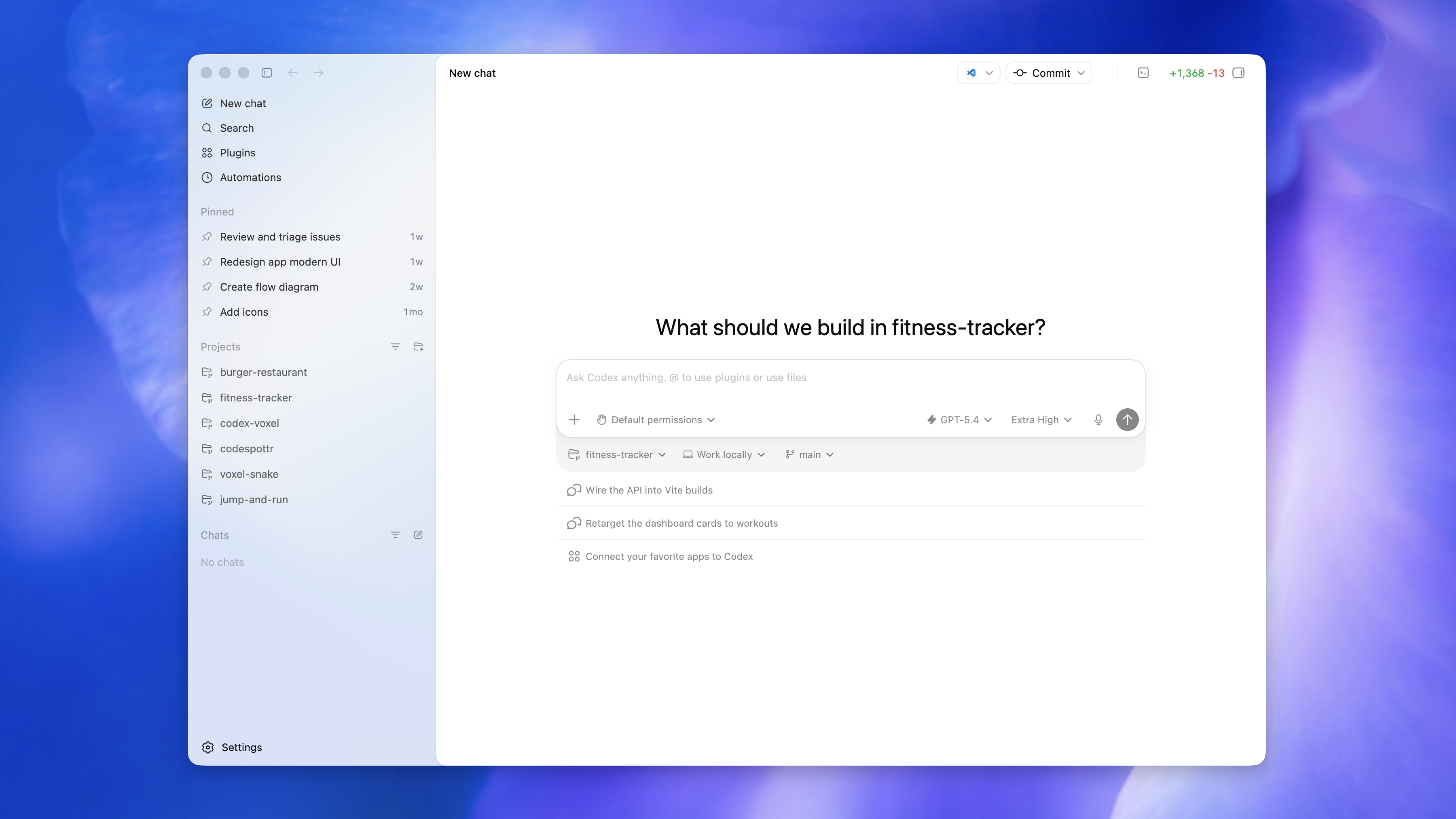
Codex Desktop App main interface

The Codex Desktop App new-thread screen: the left sidebar contains threads, search, plugins, automations, tasks, projects, and cloud entry points. The center area contains the prompt box plus permission, model, and reasoning-effort selectors.


Who This Tutorial Is For

  • Developers who want to drive AI coding through a visual desktop app, not only terminal commands.
  • Existing Codex CLI users who want a systematic view of the App, Cloud, Computer Use, Plugins, and newer capabilities.
  • Technical leads who need to roll Codex out for a team or enterprise using AGENTS.md, Skills, permissions, rules, and hooks.

Tutorial Map

1. Getting Started

ChapterWhat You Will Learn
Introduction to CodexWhat Codex is, the product matrix (App / CLI / IDE / Cloud), and account basics
Core ConceptsThe agent loop, instruction chain, progressive disclosure, three permission gates, and five customization layers
Installation & UsageDownload the desktop app, install the CLI, and sign in
Desktop AppFirst launch, adding projects, Local/Cloud, handoff, and parallel threads
App InterfaceSidebar, thread area, diff review, top bar, bottom status bar, and selectors
Quick StartComplete one verifiable task in the App and one in the CLI

2. Configuration & Customization

ChapterWhat You Will Learn
Configuration & Customizationconfig.toml layering, profiles, and CODEX_HOME
PermissionsSandbox modes, approval policies, and Auto / Read-only / Full access presets
AGENTS.mdDiscovering, merging, and rolling out persistent project instructions
Agent SkillsSKILL.md, progressive disclosure, plugins, and the plugin marketplace
Slash Commands/status, /model, /approvals, /review, /goal, and more
Rules & HooksStarlark command rules and lifecycle hooks

3. Advanced Capabilities

ChapterWhat You Will Learn
Computer UseSeeing the screen, operating GUIs, the in-app browser, Appshots, and Goal mode
Model SelectionGPT-5.5 / 5.4 / 5.4-mini / Codex Spark and reasoning effort
SubagentsExploration, review, and MCP-specialized subagent patterns
MCP IntegrationConnecting Codex to external systems through MCP
Integrations & ConnectionsPlugin marketplace, Apps/connectors, Figma, Linear, Slack, and GitHub
Workflows & WorktreesParallel threads, worktree isolation, and plan → implement → review workflows
Automation & CI/CDApp Automations, non-interactive mode, and GitHub Actions
Prompting Best PracticesHow to write high-hit-rate instructions
Advanced TipsContext management, checkpoints, resume/fork, @ mentions, and images

4. Surfaces, Security & Practice

ChapterWhat You Will Learn
IDE ExtensionUsing Codex in VS Code / Cursor
Codex Cloudchatgpt.com/codex, @codex, PRs, and mobile use
Security & Enterprise ManagementSandboxing, requirements.toml, managed configuration, and auditability
Practical ExamplesRefactoring, automated review, and Issue → PR workflows
CheatsheetCommands, slash commands, config, and models on one page
Command Line Tool (CLI)CLI config, sandboxing, models, Skills, prompts, and practical examples
ResourcesOfficial docs and community references

Suggested Learning Path

StageGoalRecommended Reading
Day 1Install the desktop app and finish the first small taskIntroduction → Installation → Desktop App → Quick Start
Days 2-3Understand the interface and how the agent worksApp Interface → Core Concepts → Permissions
Week 1Roll out conventions in a team repoAGENTS.md → Skills → Slash Commands → MCP
AdvancedUse the newer capabilities wellComputer Use → Integrations → Workflows → Automation
OngoingScale safely and govern usageSecurity & Enterprise → Rules & Hooks → CLI → Practical Examples

Prerequisites

  • Familiarity with terminal and Git basics. Many App features are Git-based.
  • At least one programming language.
  • A ChatGPT Plus / Pro / Business / Edu / Enterprise plan, or OpenAI API credits.

Version note: Codex changes quickly. Model names, feature flags, and UI details may change. Treat the official documentation as the source of truth. This tutorial is based on public documentation available in 2026.

评论